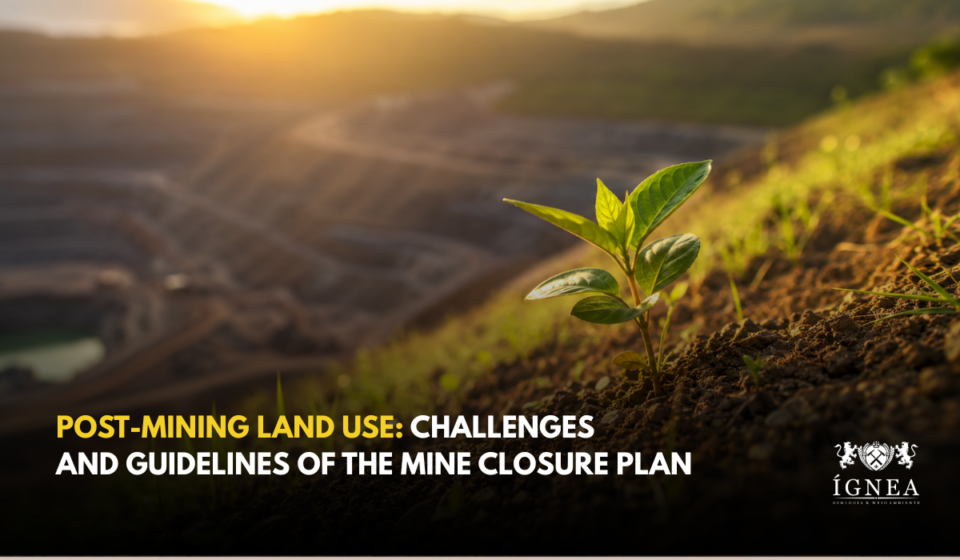
Planning mine closure goes far beyond decommissioning infrastructure or stopping extraction: it requires defining what that land will become. This is where Post-Mining Land Use (PMLU) comes in a key component of the Mine Closure Plan (MCP). If the MCP is the executive roadmap, the future land use is the ultimate goal.
This new destination, whether for environmental conservation, agriculture, real estate development, industrial districts, or water reservoirs, is not a free choice. Project viability depends on balancing the intended use with the physical transformations left behind by mining operations. Residual topography, pit and slope stability, soil quality, and post-mining hydrogeological behavior impose clear limits on what is technically feasible, all in alignment with local zoning and regional master plans.
The main bottleneck in this phase, however, lies within the regulatory environment. Because defining the PMLU is an integral part of the MCP, it requires formal approval from both the National Mining Agency (ANM) and the environmental licensing agency.
The challenge stems from the fact that both authorities evaluate the same project through completely different lenses:
- The ANM focuses its analysis on physical stability, the safety of remaining structures, and the formal closure of mining operations.
- The environmental agency focuses on ecological rehabilitation, addressing environmental liabilities, and restoring ecosystem functions and water resources.
Since mine closure requires validation from both spheres, diverging requirements between agencies can paralyze the process. If the ANM approves structural safety, but the environmental authority rejects the revegetation or land-use proposal (or vice versa), the developer is unable to complete closure and secure the surrender of the mining title.
PRAD and PFM: Dual Approval Against Title Forfeiture