The closure of a mining operation is a transitional process. In the mineral sector, Environmental Rehabilitation is the link between the depletion of reserves and the successful Tenement Surrender, the formal handover of the area to society or the original landowner.
If you are already familiar with the Mine Closure Plan (PFM) and the Degraded Area Recovery Plan (PRAD), understand now how Rehabilitation defines the success of discharging your legal liabilities.
Rehabilitation vs. Recovery: Is There a Difference?
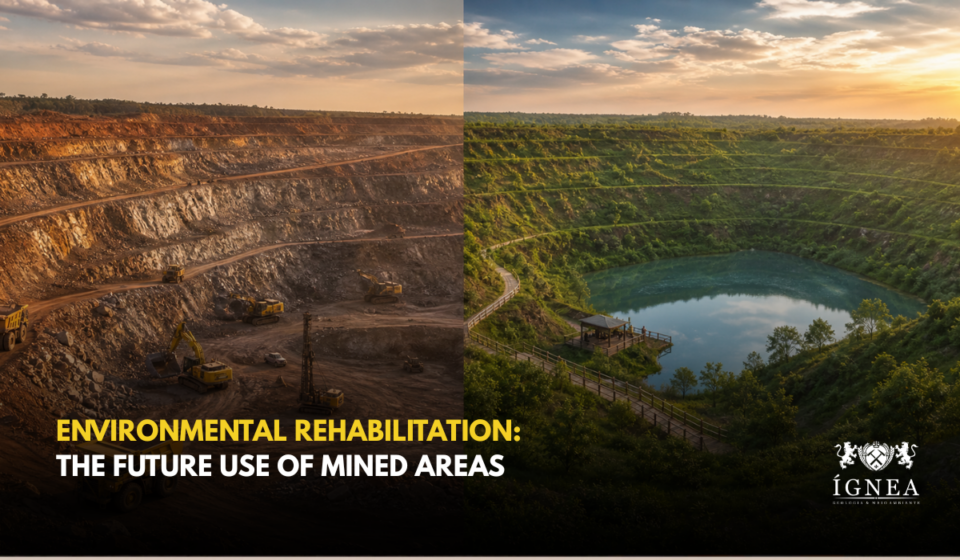
Yes. In the technical field, Recovery (the focus of the PRAD) seeks to restore biological integrity to the soil. Rehabilitation, however, is a broader concept: it aims to ensure that the area is stable, safe, and, above all, fit for future use.
A rehabilitated area can be transformed into a public park, a logistics hub, a forest reserve, or an agricultural zone. For the ANM and the environmental agency to accept the conclusion of the process, the rehabilitation project must demonstrate solid results in:
- Physical and Chemical Stability: Ensuring that slopes, pits, and dams do not pose risks of collapse or contamination.
- Topographic Adequacy: The relief must be smoothed to prevent erosive processes and allow for transit or revegetation.
- Water Control: Drainage systems that withstand the local rainfall regime without causing damage to the area or neighbors.
- Strategic Revegetation: More than just planting, but creating an ecosystem that is self-sustaining in the long term.
The “Dual Approval”
One of the biggest bottlenecks in the industry is the synchronization between the ANM (focused on structural safety and the formal Extinguishment of the Title) and the environmental agency (focused on biodiversity recovery).
Rehabilitation is only considered complete when:
- The ANM approves the Final Closure Execution Report.
- The environmental agency issues the Termination Term (or equivalent document) for the PRAD.
Only after this dual validation is the miner free from sanctions, fines, and ongoing monitoring obligations.
Future Use: Opportunity or Liability?
Early planning of the area’s future use can transform a passive liability into a valuable asset. Mining companies that consider rehabilitation from the beginning of the operation can drastically reduce closure costs, taking advantage of the earthmoving from the mining process itself to adapt the relief.
📷Generated by AI