The Experimental Mining License, locally known as Guia de Utilização (GU), is an instrument in the Brazilian mining process that allows the extraction of mineral substances on an experimental basis, even before the granting of the final Mining Concession. Its authorization by the National Mining Agency (ANM) indicates that a mineral exploration project has shown promising results and is at an advanced stage of development, close to economic viability.
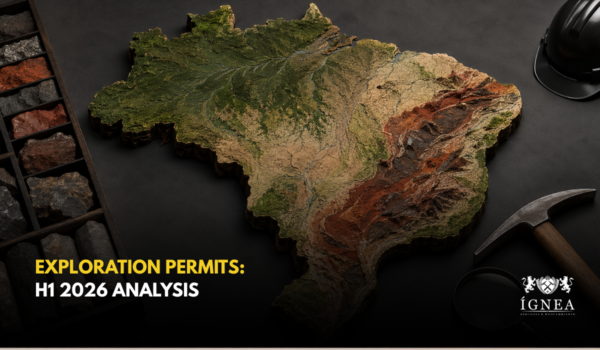
An analysis of data from the first quarter of 2026, based on a survey of the Mining Registry System, reveals an overview of where the most mature projects are concentrated. In the period from January to March, 81 GUs were authorized across the country.
The Leadership of MG, MT, and BA
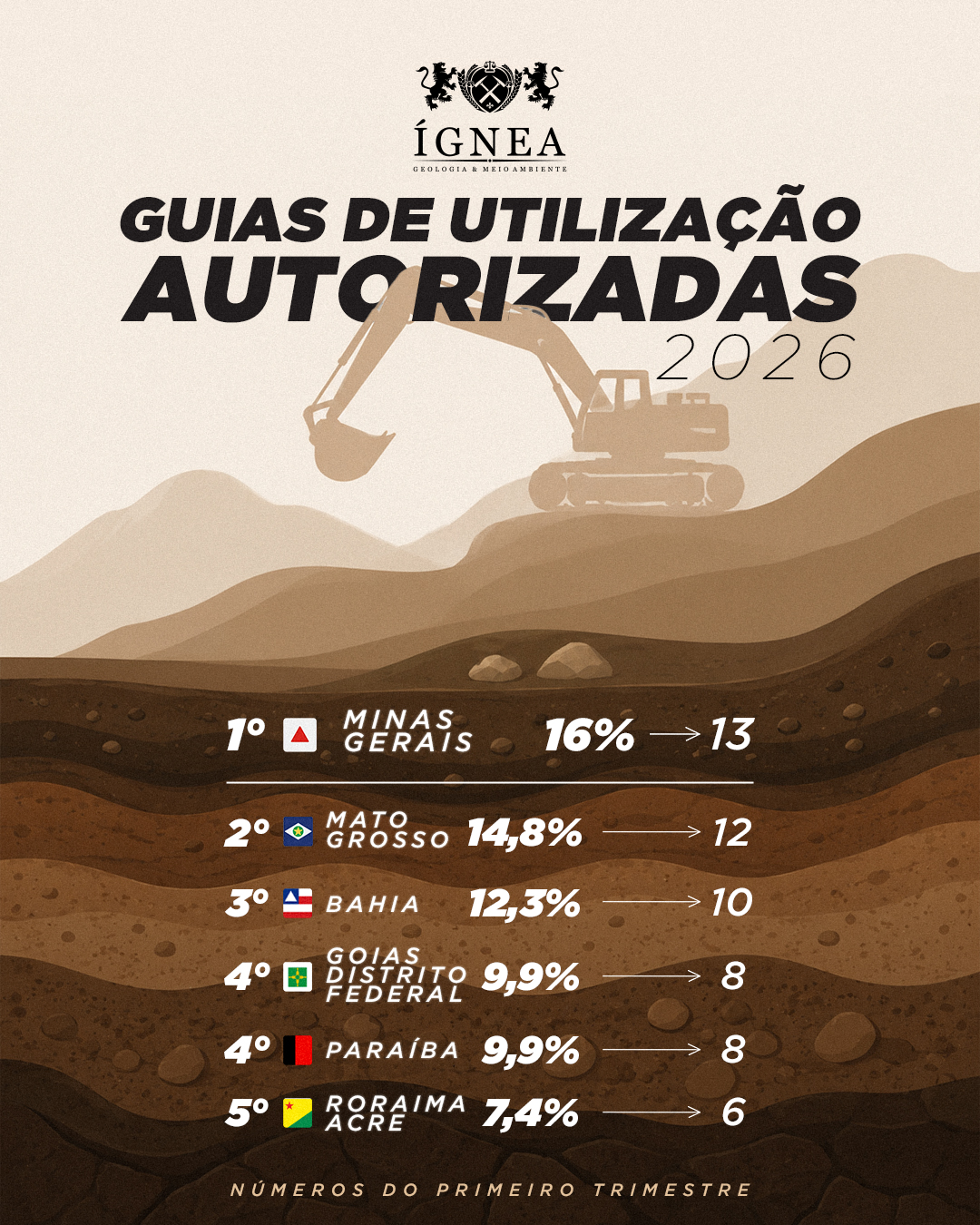
The ranking of GU authorizations in the first quarter of 2026 demonstrates a higher concentration in states traditionally associated with mining, which together account for more than 43% of the national total.
- Minas Gerais (1st Position – 13 GUs | 16.0%): The leadership of Minas Gerais in the ranking of GUs is a direct reflection of the intensity and maturity of its mineral exploration activity. The number of authorizations indicates that projects in the state are advancing from the exploration phase to the evaluation of mining viability, covering a range of metallic and industrial substances.
- Mato Grosso (2nd Position – 12 GUs | 14.8%): Following closely behind the leader, Mato Grosso consolidates itself as a hub for the development of new projects. The GU authorizations in the state may be linked both to metallic commodities, such as gold, and to strategic minerals for agribusiness, signaling the intention to anticipate production to meet an already established market demand.
- Bahia (3rd Position – 10 GUs | 12.3%): The third position of Bahia confirms the state as an expanding mineral frontier. The GUs in the region are an indication that the exploration work carried out in recent years is beginning to generate concrete results, with projects approaching the production phase.
The Second Tier and Regional Diversity
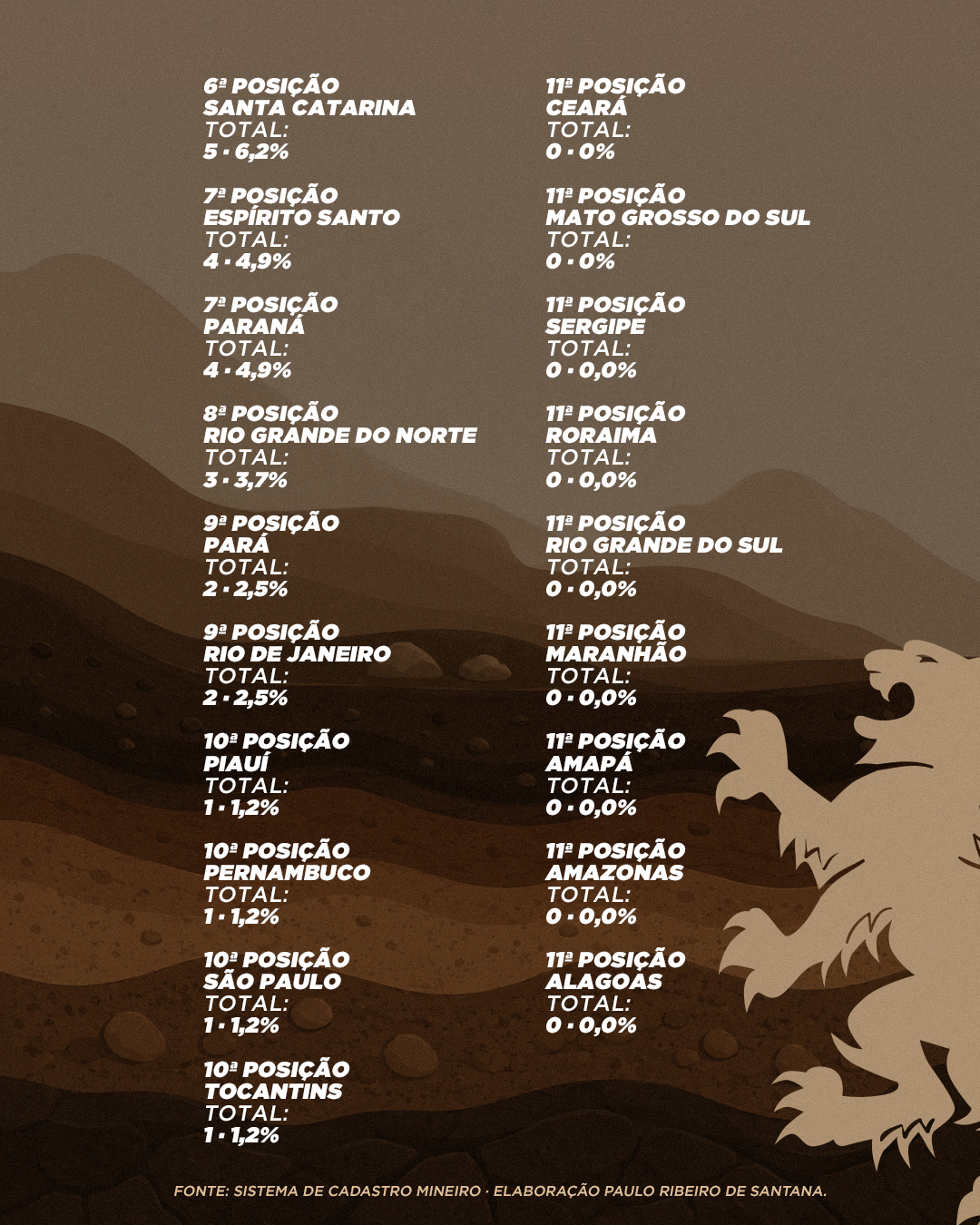
The analysis of the rest of the ranking shows the reach of advanced mineral exploration in Brazil.
- Goiás/DF and Paraíba (4th Position – 8 GUs each | 9.9%): The tie in the fourth position is notable. Goiás/DF follows the trend of developing projects linked to agribusiness, while the presence of Paraíba indicates the advancement of industrial or metallic mineral projects in the Northeast region.
- Rondônia/Acre (6th Position – 6 GUs | 7.4%): The placement of the RO/AC regional office highlights the strength of mineral exploration in the North Region, probably linked to metallic substances such as cassiterita and gold.
Strategic Implications
The ranking of GUs for the first quarter of 2026 works as a map of the most promising mineral exploration projects in Brazil at the moment. The concentration of authorizations in Minas Gerais, Mato Grosso, and Bahia signals that the future mining projects of the country tend to emerge from these consolidated hubs.
For investors and companies in the sector, monitoring GU authorizations is a market intelligence tool, as it points to assets that already have indications of economic viability and that are closer to becoming operational mines.
Data source: Mining Registry System. | Preparation: Paulo Ribeiro de Santana.
📷 Generated by AI
Graphic by Diego Santos