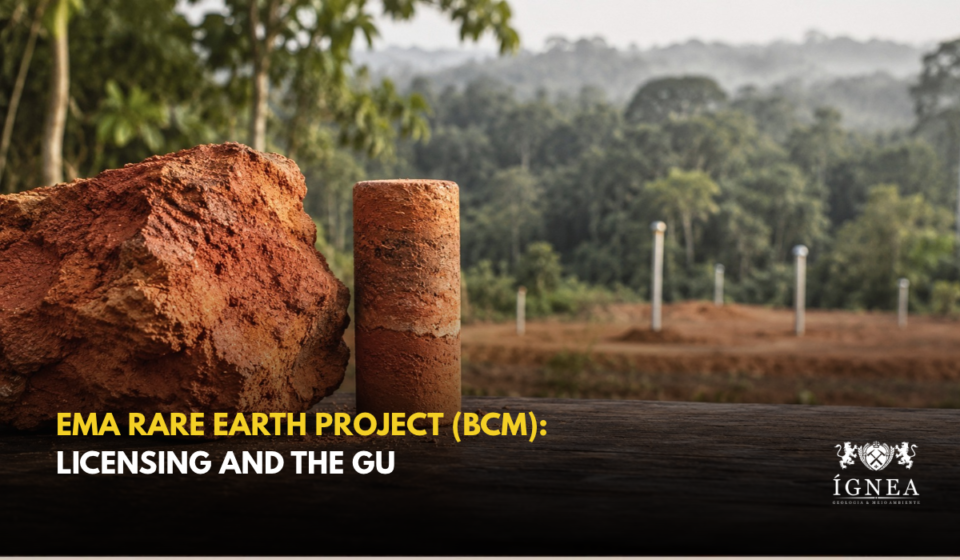
Brazilian Critical Minerals (ASX:BCM) has provided an update on the Ema Rare Earth Project, an ionic adsorption clay project near Apuí, in the state of Amazonas. According to BCM’s announcement of 26 November 2026, the final exploration reports for the project have been approved by the National Mining Agency (ANM), and the project is now awaiting decisions from the Amazonas Environmental Protection Institute (IPAAM) and from ANM itself. This article looks at the regulatory and technical steps covered in the announcement, with all information attributed to the company.
Approvals: what has been granted and what is pending
According to BCM, the position by agency is as follows:
- ANM: approval of the Final Exploration Reports for both of the project’s tenements;
- INCRA (the National Institute of Colonisation and Agrarian Reform): approval by its Amazonas office of the land-access agreement covering activities on INCRA-controlled land, together with a certificate confirming that there is no impediment to environmental licensing continuing (announced on 15 October 2026); ratification of the agreement by INCRA in Brasília remains outstanding;
- IPAAM: development environmental licensing pending;
- ANM: two applications for an Experimental Mining Licence (GU) pending.
BCM identifies the pending IPAAM and ANM approvals as its immediate permitting priority, to be advanced alongside engineering.
Reading the position
The two pending approvals are linked. The GU, which the announcement describes as a trial mining licence, authorises extraction on an exceptional basis before a Development Concession (concessão de lavra) is granted, and it should not be confused with one. To issue a GU, art. 105 of DNPM Ordinance No. 155/2016, as amended by ANM Resolution No. 240/2026, requires, among other things, an environmental licence or equivalent document that refers to the substance in the application and is held in the titleholder’s name. Environmental licensing and the GU therefore need to be tracked together.
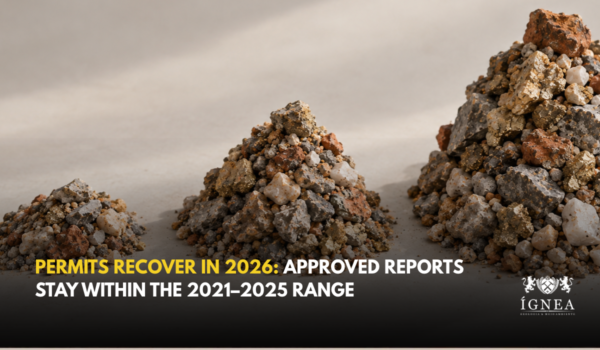
ANM’s mining registry (Cadastro Mineiro), consulted on 13 November 2026, is consistent with that position. One of the project’s tenements (No. 880.184/2016) showed approval of the exploration report for rare earth ore (24 June 2026), the GU application (29 April 2025) and the declaration that the tenement is fit to receive the GU (26 August 2026).
Read also: Technical and Procedural Stages of Rare Earth Projects in Brazil
Engineering and reagent supply
On the engineering side, the front-end engineering and design (FEED) program is being led by Altris Engineering, while BCM selects a Brazilian engineering partner to refine the plant design, update the capital estimate and schedule, and obtain firm vendor quotations. Reagent supply is part of the planning as well. Because the project is based on in situ recovery using a magnesium sulphate solution, BCM reports an agreement, made in October 2026, to acquire 90% of a Brazilian magnesium sulphate producer. Detailed engineering for that plant comes before the decision on its capacity and the completion of the acquisition.
In short, the mining, environmental and land-access workstreams for Ema are moving in parallel, through different agencies and at different stages: an approved report, an issued certificate, and a pending licence and GU are not the same thing.
Informational text, based on the company’s announcement and public records. Source: Brazilian Critical Minerals, ASX announcement of 26 November 2026; ANM, Cadastro Mineiro (consulted on 13 November 2026).
📷 AI-generated image