The issuance of a License Registry by the National Mining Agency (ANM) is one of the primary indicators of Brazil’s domestic economic activity, as it authorizes the extraction of essential minerals for civil construction and infrastructure projects. The analysis of consolidated data from the first quarter of 2026 (January to March), totaling 160 new licenses, reveals an economic geography distinct from metallic mining, highlighting regional development hubs and the demand for construction aggregates.
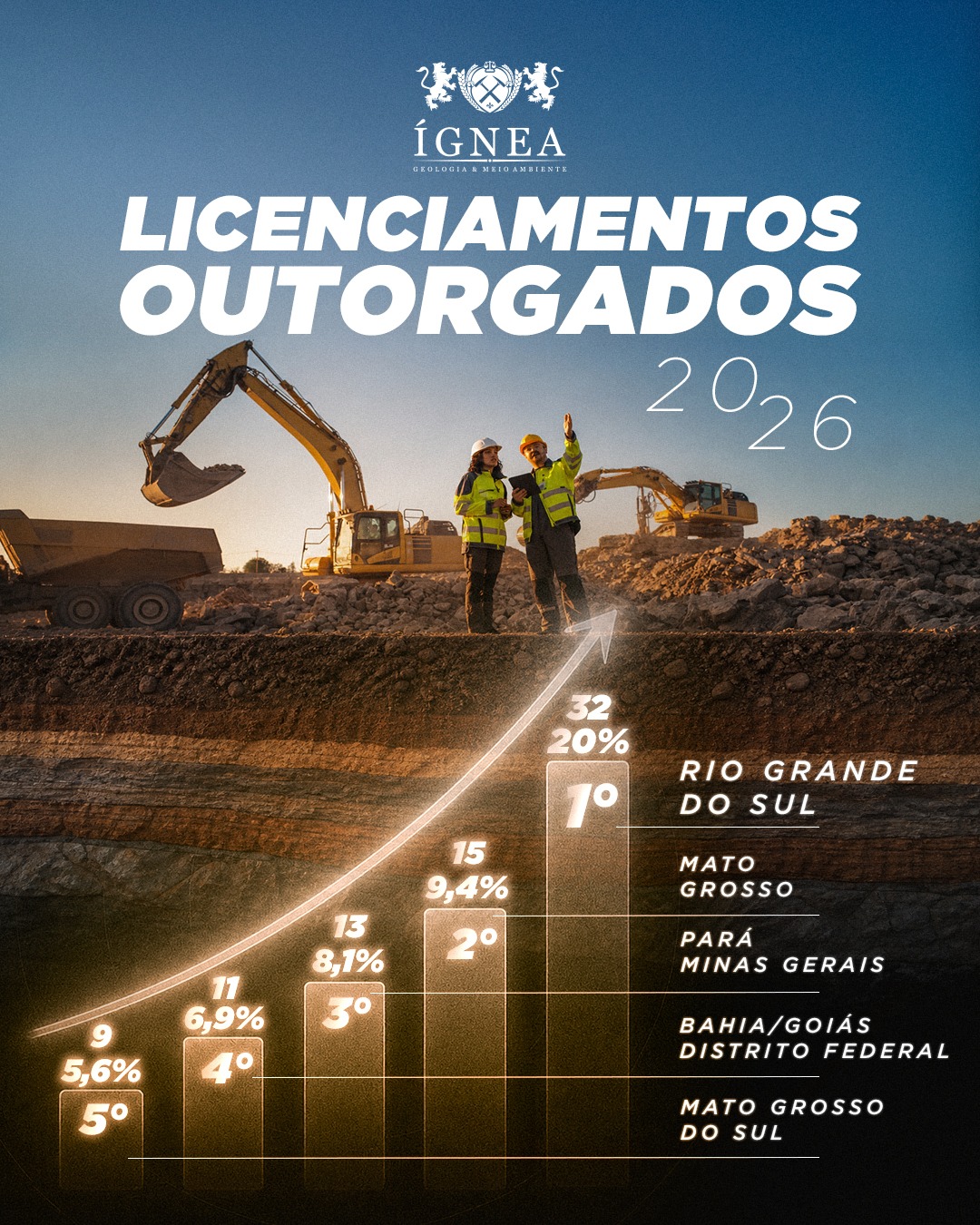
Leadership in the South and Strength in the Central-West
The main takeaway is the prominence of states whose economies are heavily driven by agribusiness and a robust construction sector, outpacing traditional export-mining giants.
Rio Grande do Sul (1st – 32 licenses | 20%): Its isolated leadership, accounting for one-fifth of all national grants, is a strong indicator of domestic economic strength. This reflects a high demand for aggregates driven by logistical infrastructure, agribusiness expansion, and real estate development.
Mato Grosso (2nd – 15 licenses | 9.4%): Mato Grosso’s position reinforces the link between agribusiness and construction mining. The continuous expansion of the agricultural frontier requires investments in infrastructure, such as roads and warehouses, sustaining high demand for new licensing.
The Role of Mining Giants and the Presence of the Northeast
While the top of the ranking is occupied by other protagonists, states traditionally associated with metallic mining still demonstrate relevance alongside regional surprises.
Pará (3rd) and Minas Gerais (4th): The presence of Pará and Minas Gerais in the Top 5, with 8.1% and 6.9% of the licenses respectively, highlights the complexity of their economies. In addition to being leaders in commodity exports, both states have growing urban centers and major infrastructure projects, keeping the demand for aggregates high.
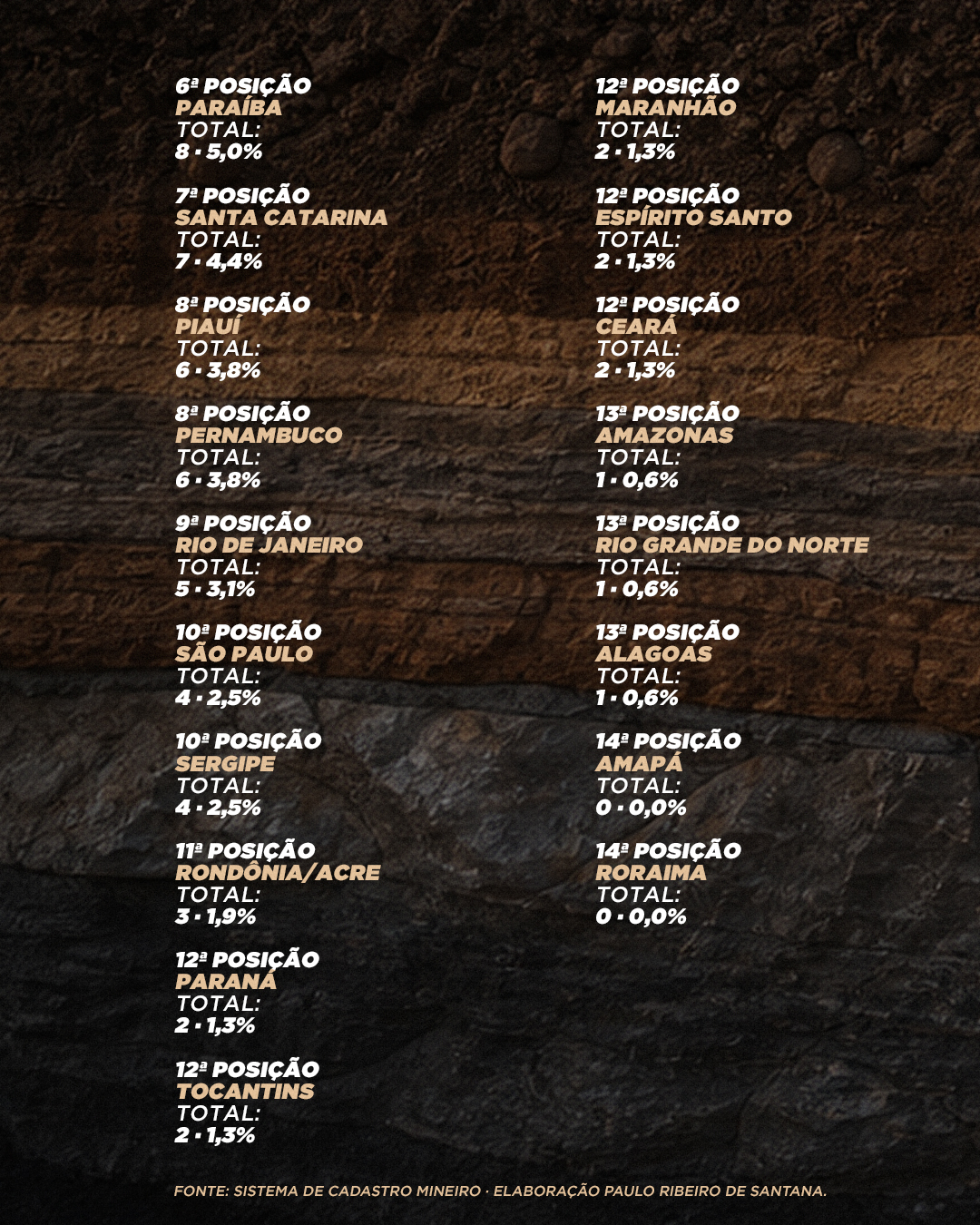
Paraíba (6th), Piauí, and Pernambuco (8th): The presence of Northeast states at the top of the ranking is notable. Paraíba, in 6th place, and the ties in 8th position demonstrate a significant dynamism in the region’s construction sector, which surpasses more populous states such as São Paulo (10th).
The analysis of the Granted Licenses ranking for the period from January to March 2026 allows for several key conclusions:
- Internal Growth Indicator: The Licensing Regime acts as a leading indicator for construction and infrastructure development, identifying hubs of peak regional economic activity.
- Opportunity Map: For companies in the aggregates, engineering, and services sectors, this ranking is strategic, as it identifies where the demand for inputs and equipment is most active.
- The Other Face of Mining: The data reinforces that Brazilian mining has a reach that goes far beyond large export projects, acting as a fundamental and widespread pillar for the country’s internal growth.
In summary, the balance of the first quarter of 2026 shows a licensing sector led by the economic strength of the South and Central-West, with strategic and relevant participation from the Northeast.
Analysis based on official ANM data extracted from the Mining Registry System, referring to the period from January to March 2026.
📷 Image Generated by AI
Graphic by Diego Santos