In the mineral sector, compliance goes far beyond operating licenses. If you carry out potentially polluting activities or utilize natural resources, the TCFA (Environmental Control and Oversight Fee) is a quarterly commitment that cannot be ignored.
1. What Is the TCFA and What Is Its Purpose?
Established by Law 6,938/1981, the TCFA is a federal levy charged by Ibama. Unlike a fine, it is a fee for Environmental Police Power. In other words, it is the amount paid for the government to monitor and inspect productive activities, ensuring they follow Brazilian environmental standards.
2. Who Is Obliged to Pay?
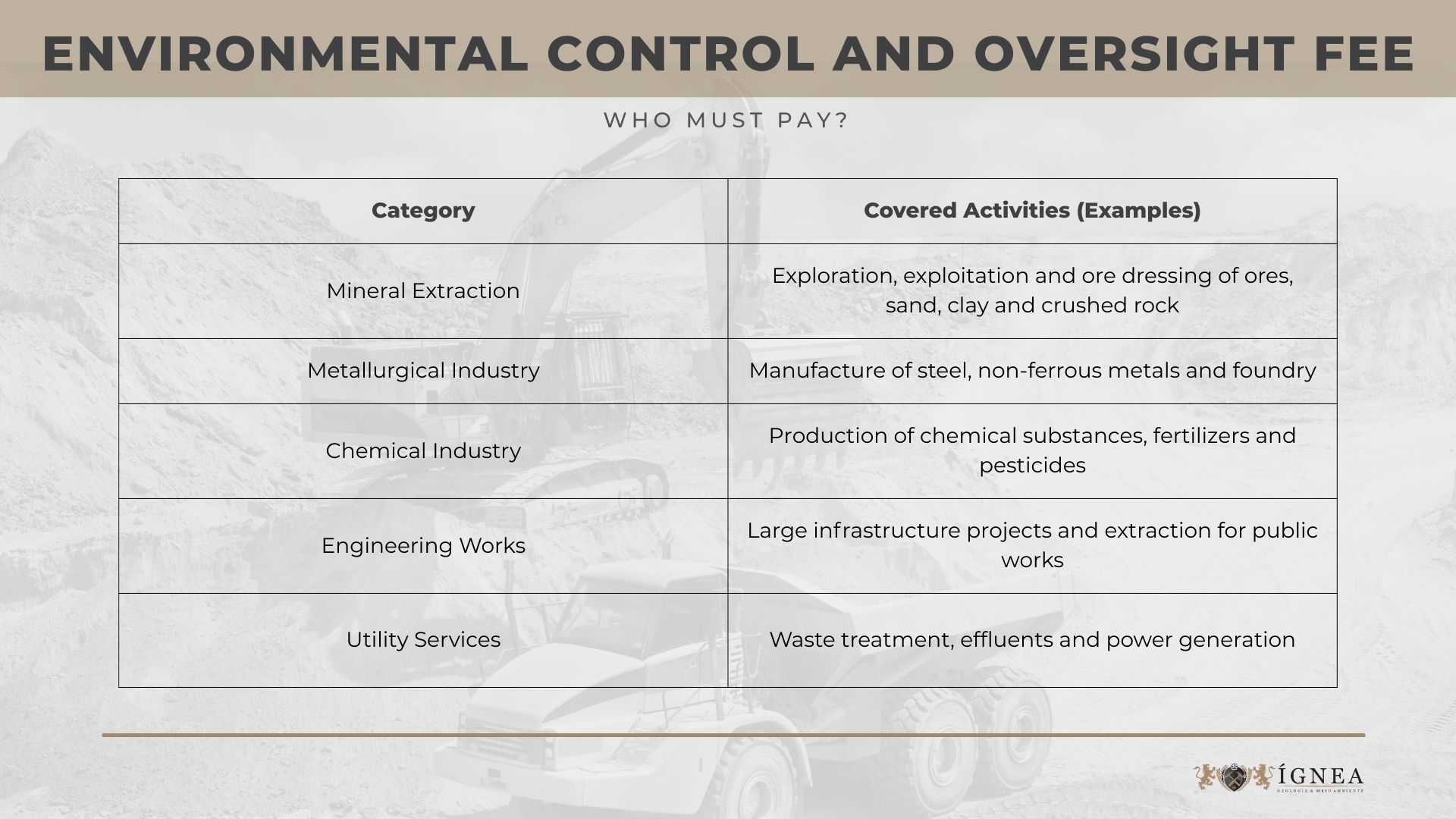
Basically, any individual or legal entity performing activities listed in Annex VIII of the National Environmental Policy. In mining, this ranges from extraction to beneficiation.
The first step is registration: To pay the TCFA, it is mandatory to be enrolled in the CTF/APP (Federal Technical Registry of Potentially Polluting Activities). The fee begins to be generated automatically from the start date of the declared activity.
Below, we list the main categories that must comply with this obligation:
3. The Change
Based on Ibama Ordinance No. 260/2023, the company size for the purpose of calculating the fee is no longer viewed by isolated Tax ID (CNPJ).
- Important: If you own a branch, the revenue considered for the fee will be the Global Gross Revenue (Sum of Headquarters + all Branches). This may raise your company’s classification and, consequently, the value of the levy.
4. Calendar and Ancillary Obligations
The TCFA is quarterly, with due dates:
- 1st FEE: 07/04/20XX
- 2nd FEE: 07/07/20XX
- 3rd FEE: 07/10/20XX
- 4th FEE: 07/01/20XX
In addition to payment, the taxpayer must submit the Annual Activity Report. Non-compliance generates fines and may block the renewal of environmental licensing and access to credit lines.
5. How to Identify Where Your Company Fits?
The final value of the TCFA is the result of crossing two factors:
- Economic Size: Defined by global annual gross revenue.
- Degree of Polluting Potential (PPGU): Classified as Small, Medium, or High, according to the mining activity performed.
To know the exact value, the manager must consult the Ibama system or rely on specialized advisory, as the values are monetarily updated and may vary according to technical cooperation agreements between Ibama and the states.
Ignoring this levy or incorrectly filling out the economic size in the CTF can generate heavy retroactive debts and legal complications at the ANM.
📷 Generated by AI
Source: ANM