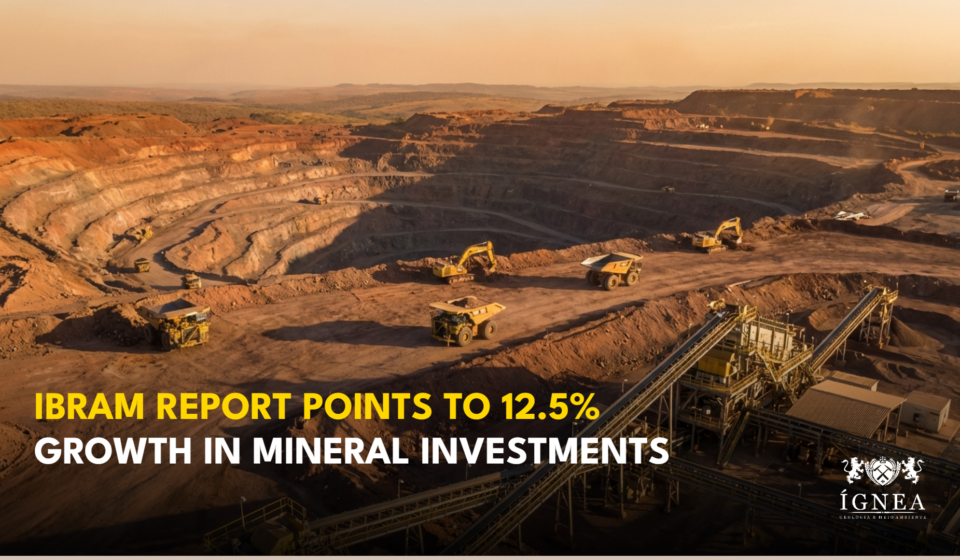
The Brazilian Mining Association (IBRAM) has revised the investment estimates for the Brazilian mineral sector for the next five-year cycle. According to the new report, contributions of US$ 76.9 billion are projected between 2026 and 2030, representing a 12.5% growth compared to the previous projection, which covered the period from 2025 to 2029.
The data indicates a trend of diversification in investments, with resources accelerating towards strategic minerals and socio-environmental agendas, although iron ore maintains the lead in absolute volume.
The Momentum of Critical Minerals and the Energy Transition
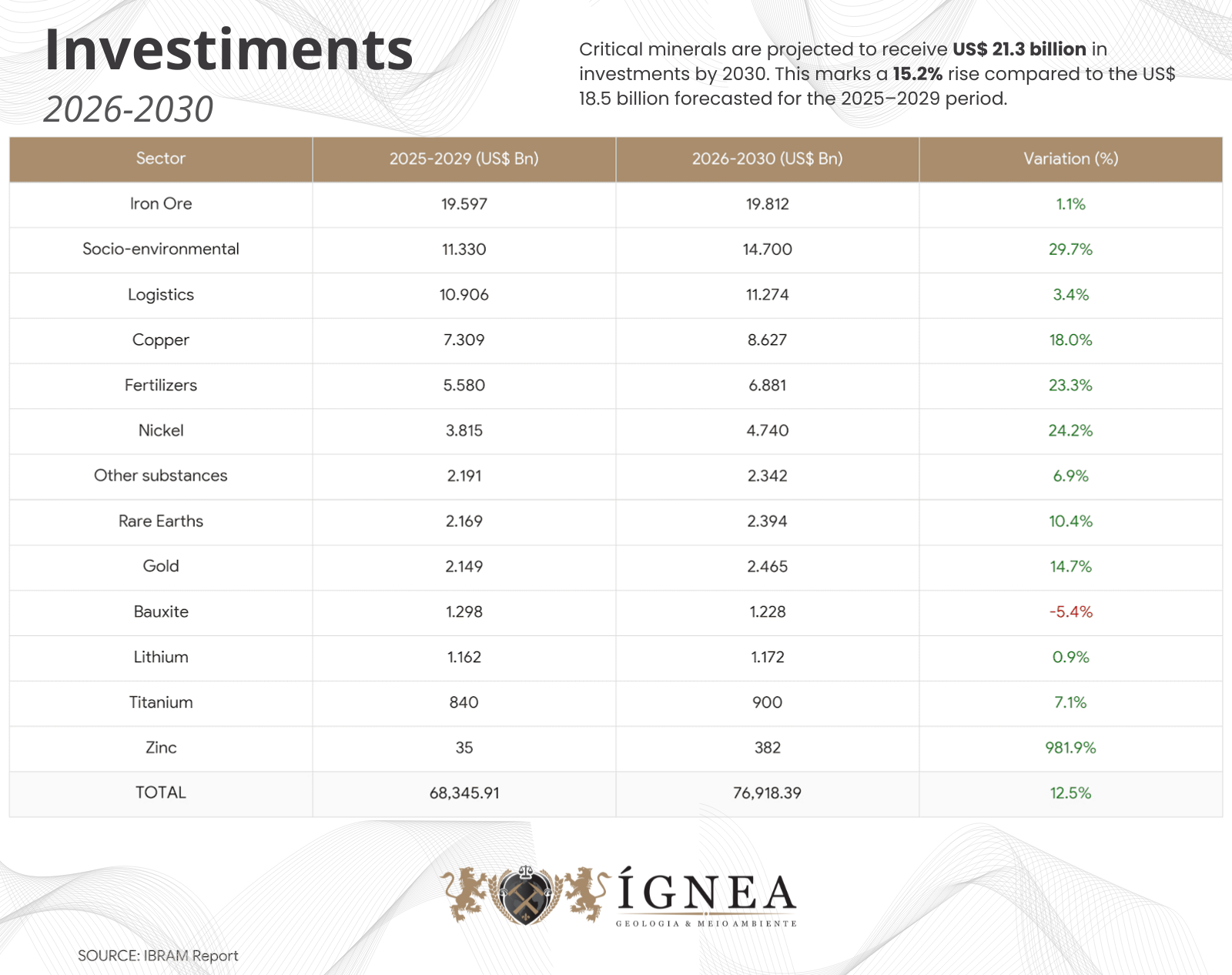
While iron ore remains the largest destination for capital, with a forecast of US$ 19.8 billion (up 1.1%), the report highlights substantial increases in commodities linked to the energy transition and food security.
Projections for copper jumped to US$ 8.6 billion, and for fertilizers, reached US$ 6.9 billion, both recording significant growth compared to previous estimates, which barely exceeded the US$ 1 billion mark each.
The critical minerals segment as a whole, including rare earths, is expected to receive US$ 21.3 billion by 2030, a 15.2% increase over the previous cycle. This movement reflects the rise in global demand for the manufacturing of high-tech equipment, such as batteries and wind generators.
Specifically for rare earths, the projected increase is 10.4%, totaling US$ 2.4 billion. Brazil, which holds the second-largest global reserves of these minerals, has attracted international attention given the need to diversify supply chains, currently concentrated in China. Representatives from the United States maintain dialogues with the Brazilian sector in search of investment opportunities in these strategic raw materials.
Socio-Environmental Investments on the Rise
Another relevant point of the report is the growth of investments in socio-environmental projects. This segment shows an increase of almost 30%, totaling US$ 14.7 billion in the overall account for the next five years. The amount includes the development and application of new technologies, such as those aimed at mining tailings reuse.
Solid 2025 Balance Sheet Supports Projections
The optimistic projections for the next five-year period are supported by the sector’s performance in 2025. According to Ibram data, the revenue of the Brazilian mineral sector last year reached R$ 298.8 billion, a 10.3% increase compared to 2024.
The volume of exports also grew. The segment totaled 430.67 million tons exported in 2025 (up 7.1%), with 416.4 million tons referring to iron ore. The collection of the Financial Compensation for Mineral Exploration (CFEM) followed the pace, totaling R$ 7.9 billion, a growth of 6.2% over the previous year.
📷AI-Generated
Source: IstoÉ