Technical Analysis of Data from January to December
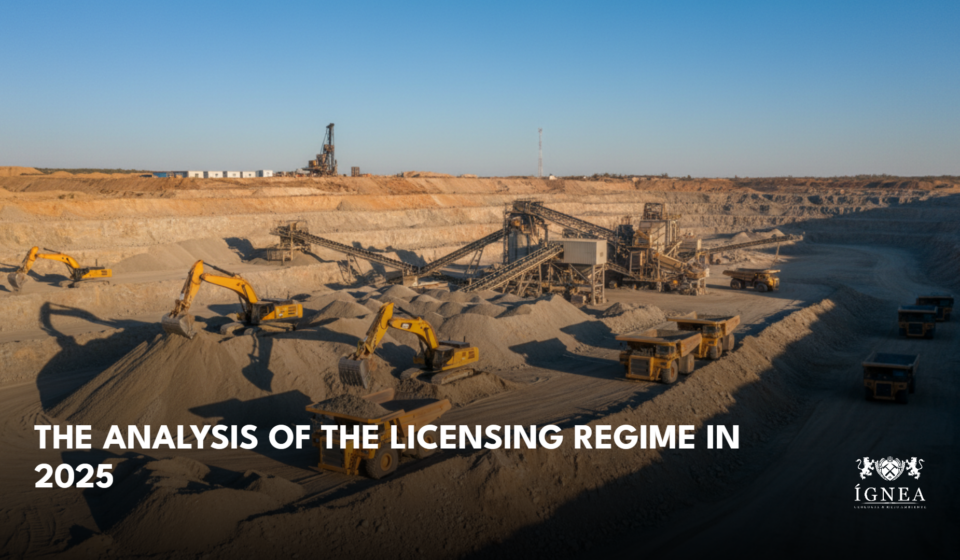
The granting of a License Registration by the National Mining Agency (ANM) is a thermometer of local economic activity, as it authorizes the exploitation of essential mineral goods for civil construction and infrastructure works. The analysis of 2025 data reveals a dynamic map, which goes beyond traditional metallic mining hubs and points to urban and regional development centers in the country.
This technical analysis considers the complete data from January to December, totaling 929 new License Registrations granted in Brazil.
The Annual Panorama
At the end of the twelve months of 2025, the ranking of states with the highest number of licenses granted consolidated a distinct economic geography, led by states with strong internal demand.
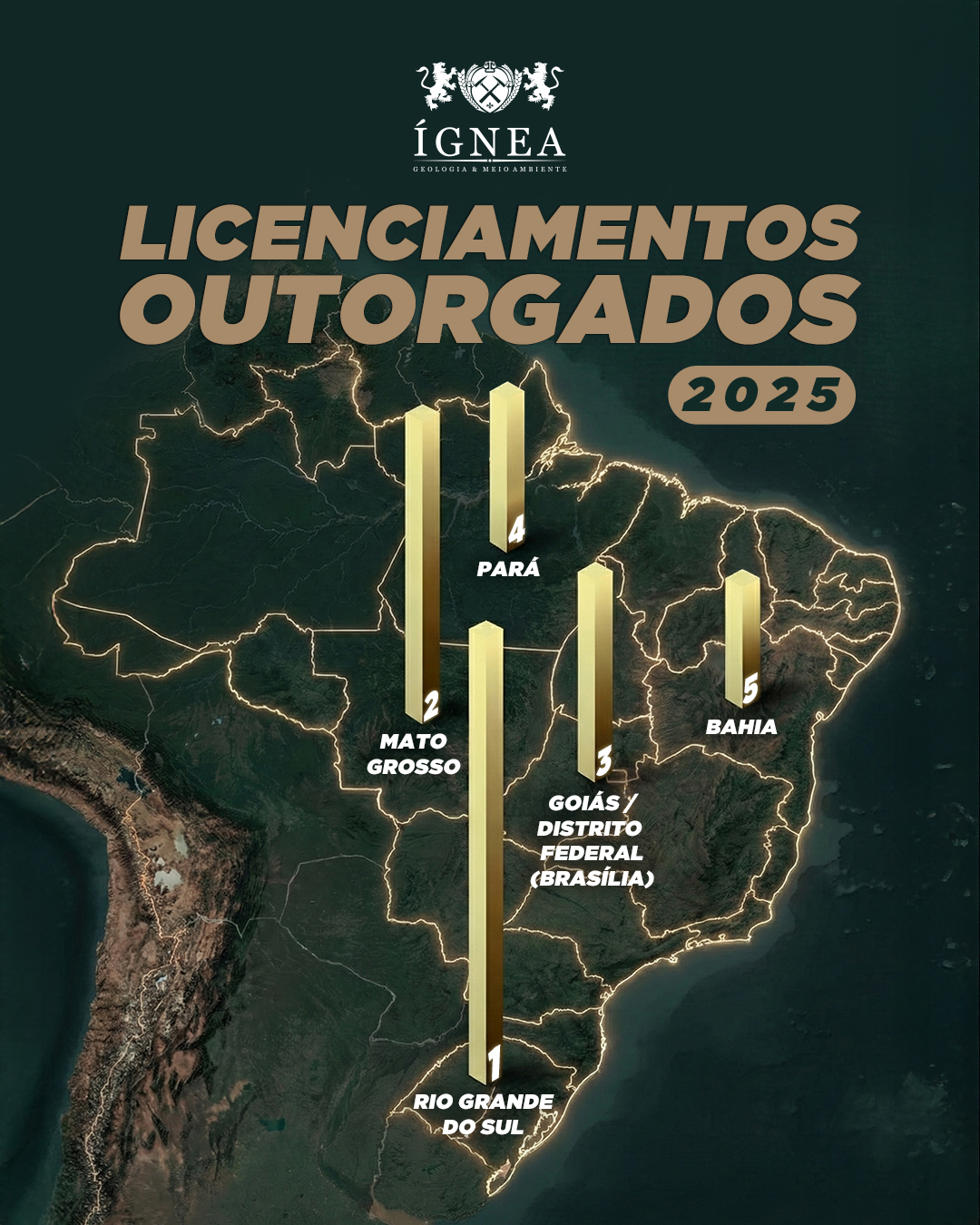
The national “Top 5” was configured as follows:
- Rio Grande do Sul: 137 licenses (14.7%)
- Mato Grosso: 114 licenses (12.3%)
- Goiás/DF: 72 licenses (7.8%)
- Pará: 70 licenses (7.5%)
- Bahia: 65 licenses (7.0%)
The leadership of states like Rio Grande do Sul and Mato Grosso demonstrates that the main engines of this regime are the strength of local civil construction and the expansion of infrastructure linked to other sectors, such as agribusiness.
The Monthly Dynamics
The analysis of the monthly distribution of the 929 grants reveals a seasonality. The year had a moderate start, with 42 licenses in January, and gained strength over the months. The second half concentrated most of the activity, reaching expressive peaks in July (95),September (96), and October (98 grants).
This pattern suggests a strong correlation with the construction calendar and dry seasons in most of the country, which favor extraction and construction operations.
Consistency vs. Performance Peaks
The trajectory of the ranking leaders reveals distinct strategies and economic contexts:
- Rio Grande do Sul (1st): The leadership of RS was built upon a foundation of consistency. The state maintained an average of nearly 11.5 licenses per month, without major oscillations, indicating a perennial and stable demand for construction materials.
- Mato Grosso (2nd): The performance of Mato Grosso was marked by high-intensity peaks, especially in July (21 licenses) and October (23). These activity peaks may be directly linked to large logistic infrastructure work cycles, possibly aligned with the agribusiness calendar.
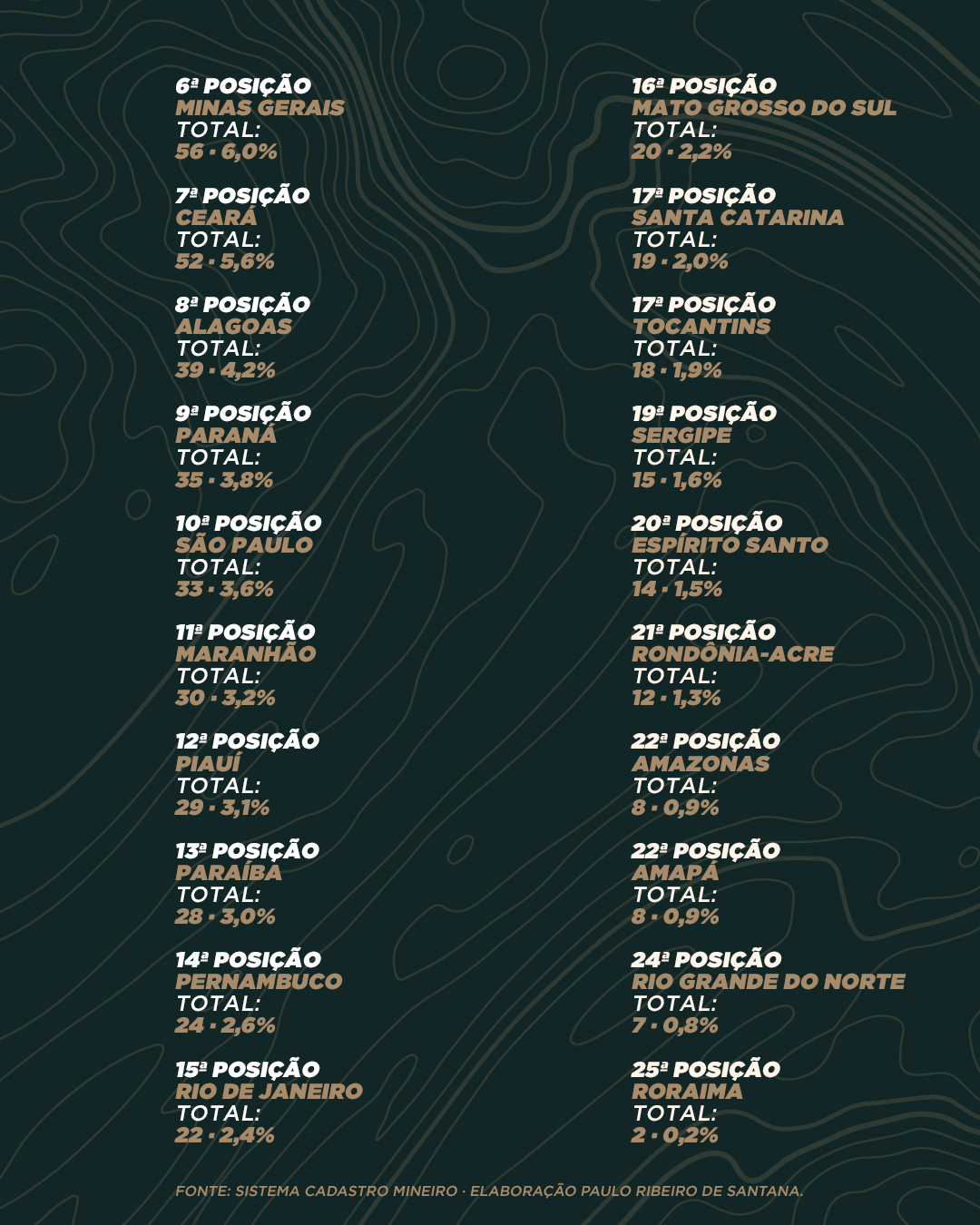
The Impact of December
The data from the last month of the year were crucial for the final configuration of the ranking, highlighting two cases:
- Pará (4th): The state registered 15 new grants in December, one of its best monthly results, which was decisive in securing its position in the national Top 5 and surpassing Bahia.
- Paraná (9th): The state obtained 35 new licenses in December, a volume that alone equals the total accumulated in the previous eleven months. This single month was responsible for positioning Paraná in the Top 10 of the ranking.
These monthly changes reinforce the dynamism of the sector and the importance of analyzing the complete data series.
The ranking reveals not only where the mineral resources are, but where the demand for infrastructure, housing, and economic growth is hottest. Understanding seasonality and regional growth vectors is a tool for strategic planning and market prospecting in the construction aggregates sector.
📷Generated by AI
Diego Santos